
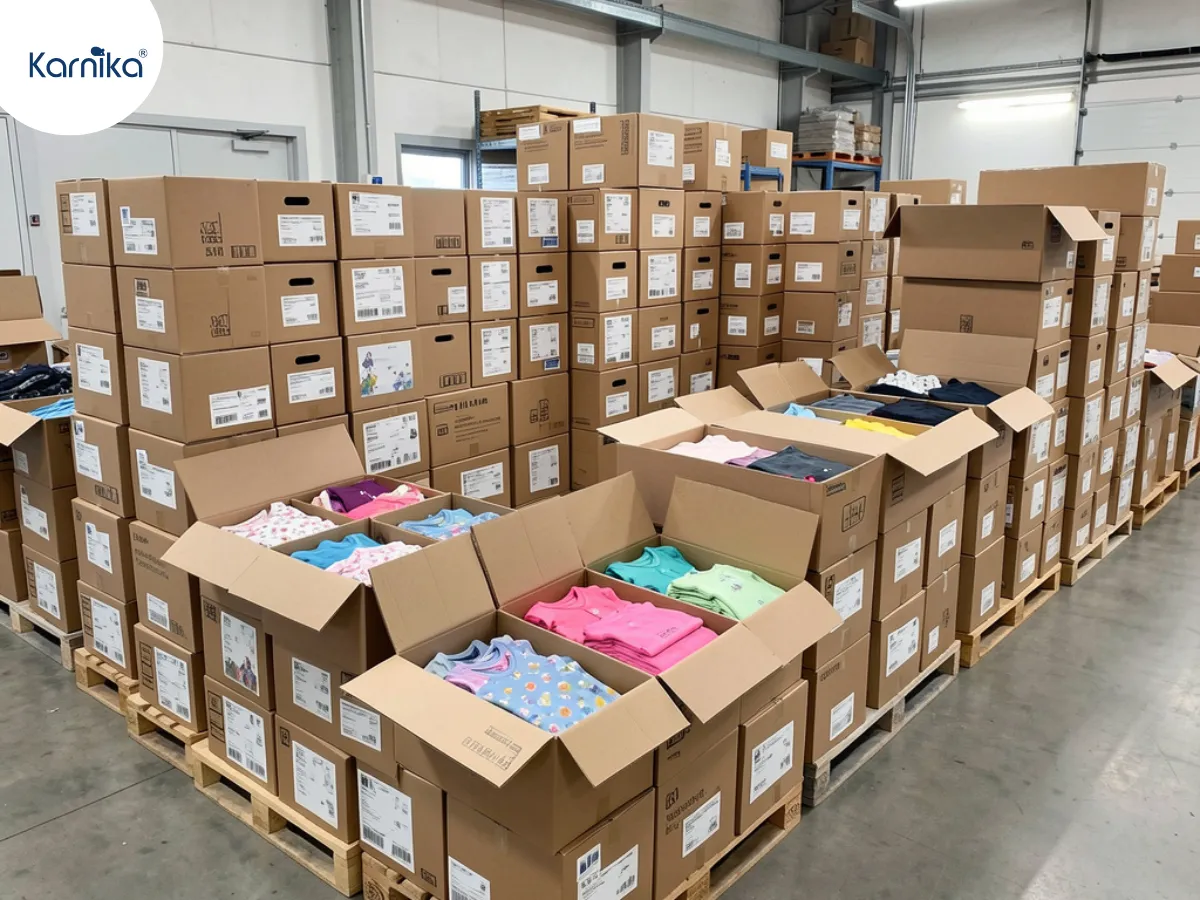
Bulk purchasing is a part and parcel of a retailer’s life. However, one common retailer mistake can cost a lot. It can lead to unsold inventory, resulting in blocked cash flow and reduced profits. Managing kidswear can become difficult as demands change depending on size, age, season, trend and festivities. With the advent of social media, parents are aware of the latest trends, and their demands are very specific. So, retailers should avoid the following mistakes in kidswear wholesale clothing so that they can earn profits.
Problems Faced in Wholesale Infant Clothing
Retailers often face the following problems:
- There are dead stocks that do not move.
- Return rates are high.
- Customers complain about the quality or fittings and return products.
- They miss seasonal sales opportunities, which affects the profit game.
The following table shows how poor planning, low quality and wrong buying decisions can affect the profitability, customer retention, efficiency of inventory and sales performance.
| Area | Number |
| Dead / Slow Inventory | 20–30% |
| Excess stock from wrong size mix | 15–20% |
| Apparel return rate | 10–18% |
| Customers who don’t return after poor quality | 60–65% |
| Higher defect-related cost from low-price sourcing | 30–40% |
| Sales loss due to late seasonal buying | 20–25% |
| Better inventory turnover with reliable suppliers | 15–25% |
| Markdown risk for trend-based products | 40–60% |
Buying Without Understanding Customer Demand
A major common retailer mistake is assuming that every category in kidswear will sell equally. That is not practically possible. For instance, the demand of new born to toddler age is very high as kids grow very fast during this stage. Again, demand for comfortable fabric is more around the year as parents want their children to be comfortable. However, again, during festive seasons, parents want their children to look their best, so the demand changes. The retailers cannot think that all products will sell all the time.
What goes wrong?
- Retailers ignore demand by age.
- They fail to track gender-based demands.
- They place bulk orders but fail to track past demands.
As a result,
· 20–30% inventory becomes dead stock
· 10–18% apparel return rate
· 60–65% customers do not repurchase after receiving poor quality
What to do instead?
- Previous sales records of at least 1 year should be tracked.
- Importance should be given to fast-moving inventory like daily wear, basics, or festive wear.
- Retailers should share demand insights with their kids clothing manufacturers to get the right order.
If retailers focus on demand-based buying, they would not face losses.
Size Ratio Planning Poorly Done
Not choosing the proper size distribution is one of the biggest reasons that can result in leftover inventory.
What are the common issues?
- Many retailers tend to overstock extreme sizes.
- They run out of popular mid-range sizes.
- Many retailers tend to accept standard-size ratios without local data.
For wholesale infant clothing, the size ratio is very crucial. The demand changes as per the customer base. It is thus necessary to customize size ratios based on the store’s actual sales performance.
Compromising on Fabric Quality
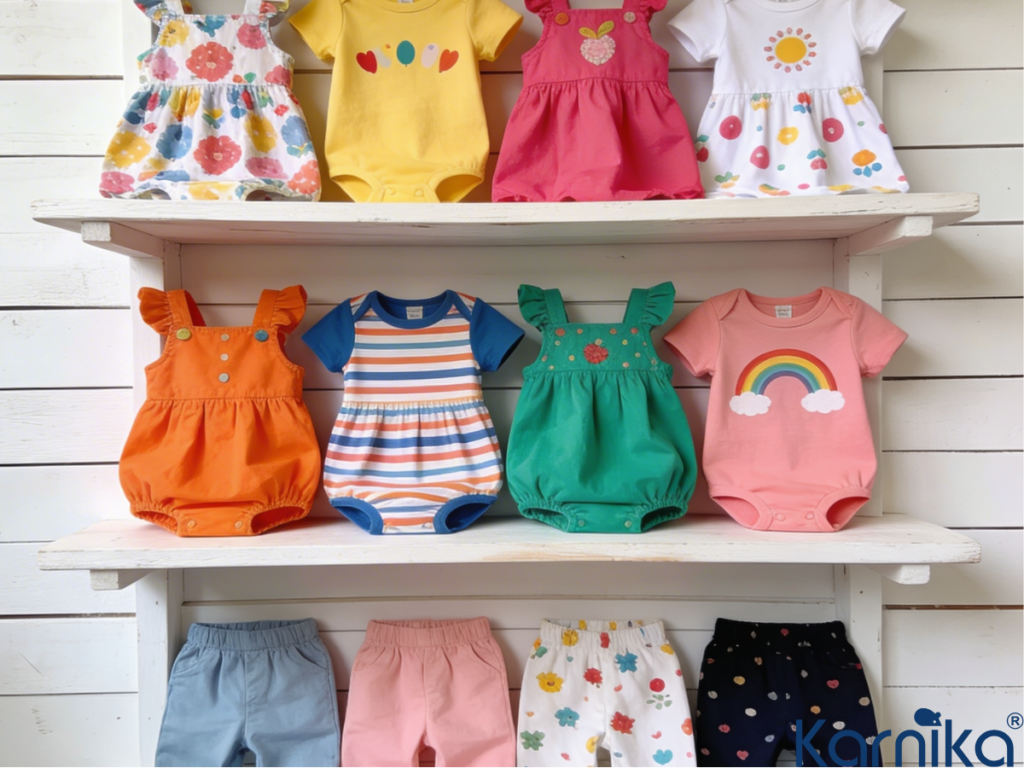
Parents are extremely concerned about their children’s comfort. Thus, when retailers choose lower-cost fabric to increase profit margins, it becomes a grave mistake. This common retailer mistake hurts long-term business and their reputation, too.
Risks of Compromising Quality
Quality products improve the reputation of both manufacturers and retailers. Poor quality products result in:
- Skin irritation may lead to skin problems.
- Sweating because of poor breathability, causing discomfort in children.
- Loss of repeat customers
It is thus best to work with good quality wholesale clothing distributors in India who provide soft, breathable, and strong fabrics suitable for children.
Quality always helps to build trust. At Karnika Industries, quality is the first priority, which results in happy customers and repeat buyers.
Read Me: Low MOQ Clothing Manufacturer: Hidden Risks & Insights
Skipping Sample Approval Can be a Mistake
Many retailers place bulk orders without checking samples to save time. That is a huge mistake. This often leads to problems such as:
- Sizes do not fit properly.
- Stitching that is weak also affects the quality of the product.
- There are colour differences.
- There is poor finishing.
Reliable wholesale kids clothing suppliers will provide samples for approval, and that helps to save huge losses.
Read Me: The Hidden Risks of Buying Kidswear without a Pre-Production Sample
Chasing Trends Blindly
People follow trends, and people demand trends. But following fashion trends without market validation is a risky common retailer mistake.
What happens?
- When huge products are produced only by following current trends, often the design sells slowly when the hype of the trend fades.
- When the trend goes, in order to clear the stock, the retailers have to give heavy discounts.
What to do then?
- Balance is the key. Keep 70% evergreen styles and 30% trend-based designs to avoid the clearance pressure. Evergreen styles never go out of trend.
- Retailers should study what the trend is in the local market instead of following international trends.
Top brands for kidswear in India make sure that they focus more on basic wear in order to maintain consistent sales.
Ignoring Durability and Wash Performance
Kidswear is frequently washed with warm water and antibacterial detergents. Thus, good kidswear should always endure these frequent washes. Usually, if the quality is poor, there are several problems like colour bleeding, fabric shrinkage and loose stitching.
These are a few criteria that are not acceptable to parents who want the best for their kids. When durability is poor, there are more returns, no re-purchase and bad word – of- mouth.
At Karnika Industries, we specifically focus on the quality and durability of the products so that the customers have a happy experience.
Focusing Only on Low Price
Retailers often think that buying more low-priced products can help to make a profit. However, there are hidden costs of cheap sourcing that lead to:
- Higher defect rates of the products.
- Increased returns and a greater tendency for exchanges
- Customers are highly dissatisfied as low-priced products can give poor quality as well.
So instead of focusing on the lowest price, the retailers should see that the:
- Quality is consistent
- Supplier is reliable
- There is after sales support.
When retailers work with experienced kids clothing manufacturers, it ensures that there are better long-term margins.
Read Me: How Pricing Actually Works in the Kidswear Wholesale Market
Choosing the Wrong Supplier Can Affect the Business
Supplier selection is crucial, and it directly affects product quality and the timelines of delivery. If the supplier fails, the retailer does not have any other option.
What to keep in mind?
- Retailers should check if there is inconsistent sizing.
- They should give importance to communication.
- They should follow up on delayed shipments.
- They should check if there is defect replacement support.
If the retailers see that there are problems, they should not continue with the suppliers.
Retailers should choose a wholesale kids clothing supplier who has experience in kidswear production. Experienced suppliers are able to keep proper quality control and clear policies.
Poor Seasonal Planning Reduces Sales
Seasons and festive timings are crucial in kidswear. As children grow fast, parents do not stock up clothes for their kids. Thus, the demand always rises when the season is near. For example, no one will buy a dress for Navratri in January. The demand will rise two to three months prior to the grand festival. Retailers often order some seasonal wear either too early or too late. This might lead to missing peak demand periods.
Top brands for kidswear in India 2–3 months in advance and confirm delivery schedules with their supplier.
Buying & Planning Benchmarks
| Factor | Recommended Numbers |
| Evergreen styles in inventory | 60–70% |
| Trend-based styles | 30–40% |
| Seasonal buying lead time | 2–3 months |
| Sales data analysis period | 6–12 months |
No Clear Return or Defect Policy
Another common retailer mistake is not clarifying return policies before buying. There can be mistakes, and there can be returns.
One should always confirm:
- If there are any replacement policy for defective items
- What are the acceptable defect limits?
- What are the claim timelines?
- Have a written agreement.
The suppliers who are experienced and professional always provide aftersales support to the retailers.
Conclusion: Avoid Mistakes to Improve Profitability
Retailers face inventory losses in kidswear retail because of poor planning decisions.
However, successful retailers focus on:
- Data from 1 year before buying.
- Quality over low-cost deals.
- Balanced product mix, keeping the trend and demand in mind.
- Strong relationships with reliable suppliers who also give after-sales support.
If the retailers avoid the common retailer mistakes, they can build a trusted reputation in the competitive kidswear wholesale clothing market.
Frequently Asked Questions (FAQs)
1. What is the most common retailer mistake when buying kidswear in bulk?
When retailers place bulk orders without analysing the past sales, they make the most common retailer mistake. This often results in 20-30% dead stock.
2. How can retailers reduce dead stock in kidswear wholesale clothing?
Retailers should study at least 6–12 months of sales data. They should focus on fast-moving categories that have demand around the year. They should maintain balance.
3. Why is size ratio planning important in wholesale infant clothing?
If retailers plan sizes incorrectly, there can be 15–20% excess inventory in slow-moving sizes. If the size ratio is adjusted as per the local demand, the problem does not arise.
4. Why should retailers work with experienced kids clothing manufacturers?
Experienced kids clothing manufacturers make sure that the quality is good. They also focus on proper planning. When retailers work with good suppliers, the inventory turnover can be 15–25%.
5. How do return and defect policies help retailers?
If the policies are clearly mentioned in written documents, retailers do not have to face extreme losses.