
For most children’s clothing wholesale suppliers, success is rarely dependent on or defined by profit alone. Why? Because these suppliers understand that cash flow is much more crucial for keeping the business alive than just the profits.
Many new businesses entering the kidswear wholesale market make one very common mistake. They think that spending their entire starting budget on inventory is the best way to begin their business. But even though the store remains fully stocked, in reality, the bank account keeps getting emptier slowly in the background.
In fact, just when you need to restock on the products selling fast, you realise you have no capital left.
And that’s exactly why we are here to guide you with what planned and experienced wholesale kids’ clothing suppliers do. You will learn practical steps that will help you make smarter decisions and also lower your financial risks.
Understanding cash flow in wholesale kidswear
Yes, the first step is, of course, to understand why keeping your capital in business carefully under check is necessary in the kidswear industry.
Kids’ clothing manufacturers manage their capital strategically because it is what will help them purchase their inventory and manage operations smoothly. Plus, the better you manage your capital in business, the better you will be able to pay your staff on time and also respond to unexpected challenges (and opportunities) in the best possible way.
So, what is cash flow in simple terms?
In its basic sense, cash flow basically refers to the movement of money in and out of a business. And a healthy cash flow will help you maintain business capital and keep it circulating instead of getting stuck in unsold inventory or unpaid expenses.
Your money comes in from the sales you make, profits you earn, and also the advance payments your buyers sometimes make. And this money is then used for making inventory purchases from children’s clothing wholesale suppliers, rent for stores or warehouse costs, and marketing and advertising charges. Plus, it also goes into the salaries of your staff and any other types of operational expenses.
Why managing cash flow in kidswear feels different?
The kidswear wholesale market generally behaves a little differently from other types of fashion or apparel segments. There are a few specific factors that make cash flow management critical and necessary for healthy capital management.
If you talk to most kidswear manufacturers in Kolkata or elsewhere, they will tell you how managing money in the kidswear business isn’t as predictable as other businesses. There is generally a stable demand for kidswear, but the way kids’ products sell can often change very quickly.
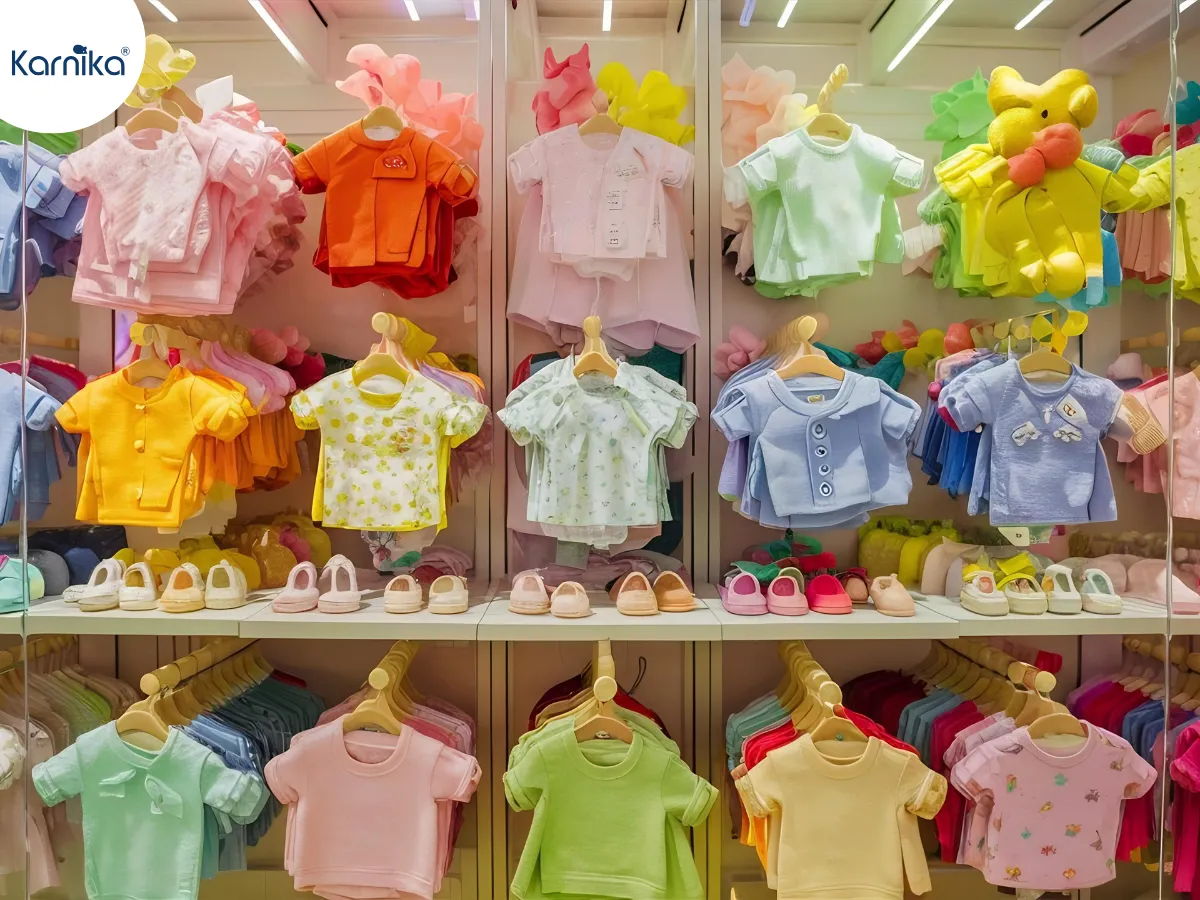
Children grow faster than the trends for clothing change, and this means that parents keep shopping more frequently for their children than themselves. This creates regular sales, but it also means that retailers and suppliers need to constantly refresh the inventory. For a wholesale kids’ clothing supplier, this can be very challenging as they need to make careful planning regarding what they order and when they do that.
Plus, kids’ clothing manufacturers need to plan according to the seasonal changes, as in kidswear different types of clothes sell during different seasons. And this means that they need to invest capital early and wait for the sales to happen in order to recover the money later.
Trends and sizes in kidswear are also very different from adult fashion, and while one day cartoon figures on toddler clothes and onesies in bright colours for babies may be selling faster, the next day these might go out of fashion. Every business owner needs to track size-wise and trend-wise sales carefully, as planning according to these will help manage their capital in business more smoothly.
Steps to manage a healthy cash flow and steady capital management in kidswear
Before placing the first order, children’s clothing wholesale suppliers must think about how much of the capital should actually go into inventory.
Step 1 – Plan your inventory budget strategically
Having a disciplined inventory budget is the foundation of capital management in any kidswear business and wholesale kids clothing suppliers who understand this makes much more than just profits. Here is a structured way of planning your capital:
The 50–30–20 allocation strategy
50% Core Inventory
You need to keep the 50% your capital aside for fast-moving essentials like:
- Basic cotton T-shirts
- Simple leggings
- School wear
30% Seasonal or Trend items
This next portion of your capital must go towards clothing styles and options that aren’t always fast-moving, but attract parents during specific seasons or trends. These can be:
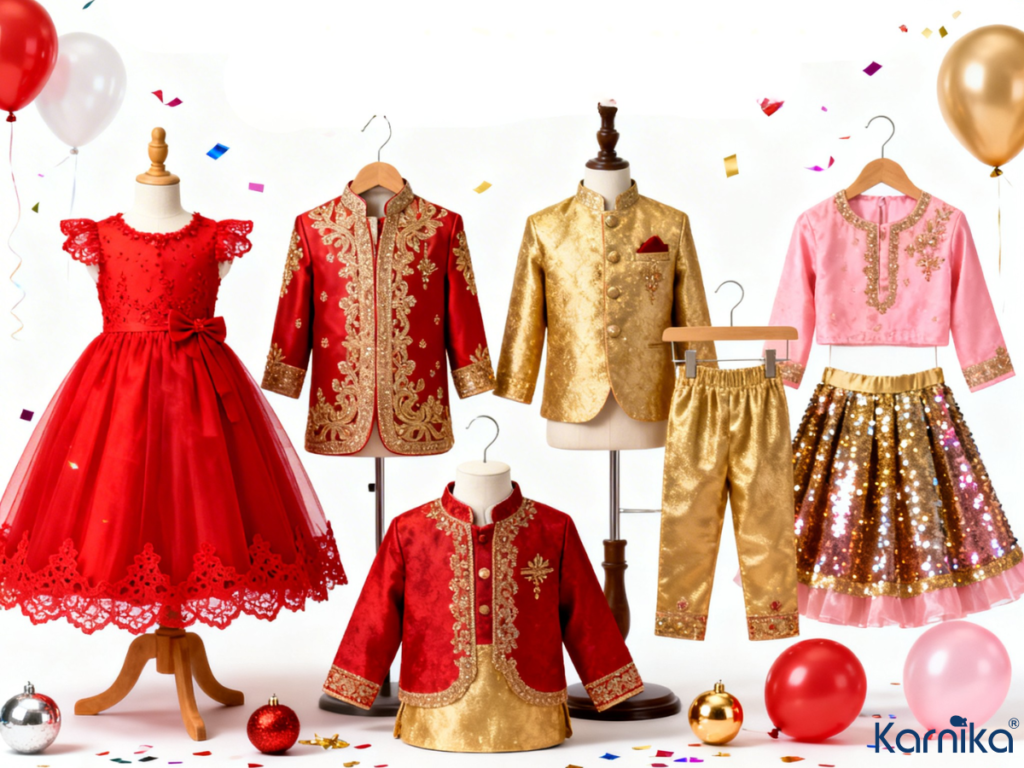
- Festival collections
- Cartoon prints on clothing like T-shirts and tops.
- Winter wear or summer sets.
- Occasion-based outfits for infants, toddlers, and school-going children.
20% Emergency / Reorder buffer
This is the most important (secret weapon, if you may call it so) portion because it will help you when you are in the most need of money. It should remain initially unspent and should be used for situations like:
- When you need to restock best sellers.
- In case there is a sudden market demand for a particular style or trend.
- For times when there is a new opportunity for suppliers.
Here is an example calculation
If the total purchasing budget is INR 100,000:
- INR 50,000 → Core inventory
- INR 30,000 → Seasonal products
- INR 20,000 → Emergency reserve
Step 2 – Negotiate smart payment terms
Payment terms can significantly affect cash flow in wholesale clothing businesses, and therefore, wholesale kids’ clothing suppliers must learn to negotiate well.
Basically, deciding how and when payments are made to suppliers makes a very high impact on how smoothly money flows through the business. And experienced children’s clothing wholesale suppliers pay attention to this flexible payment process. Sometimes, a slightly higher price with better payment terms is far more effective for cash flow protection than lower initial prices.
Here is an upfront payment vs credit terms example:
| Payment Type | Pros | Cons |
| Full Advance | Lower supplier price | Cash gets locked immediately |
| 30–60 Day Credit | More flexible cash flow | Slightly higher cost |
Bonus: When to use credit terms
Credit terms are particularly useful in specific situations like:
- When demand rises: When demand is rising before a festival or school season, with credit, it is possible to expand inventory levels without exhausting cash reserves.
- When testing new collections: Testing new designs and product types is less risky with payment not due until the product starts selling.
Tip: For children’s clothing wholesale suppliers who have recently started the business, maintaining a balance between advance payments and credit purchases will help maintain financial flexibility.
Step 3 – Controlling the inventory turnover
Inventory turnover refers to the rate at which products sell and new products replace the old. So, basically, if a product remains unsold for a very long time, they keep the capital blocked, and this slow-moving inventory is harmful for the growth of the business.
In the kidswear wholesale market, overbuying certain sizes and not keeping a balanced size ratio can be one of the common reasons for slow-moving inventory. Additionally, pieces that remain unsold because of a trend dying sooner than predicted or poorly forecasting demands are other reasons for this pile-up.
It is necessary that, as suppliers, you understand this gap and create an inventory planning that works in your favour.
So, what does an ideal reorder cycle look like?
What we have seen from our experiences is that following these patterns can benefit wholesale kids’ clothing suppliers:
- Fast-moving items: Reorder every 3–4 weeks to maintain stock without putting unnecessary pressure on your inventory.
- Slow-moving items: Apply discounts quickly to convert stock into cash rather than waiting months.
Here is a mini formula that works:
Inventory turnover = Cost of goods sold ÷ Average inventory
Step 4 – Avoid mistakes that make your overstock
Overstocking is one of the fastest ways to damage cash flow, but if you can plan your stocking well, then you will not only have a good cash flow, but also avoid a bad relationship with your kids’ clothing manufacturer.
Here are a few things to definitely avoid:
- Do not buy excessive extreme sizes, like the smallest or the largest.
- Avoid emotional buying at trade shows and always stick to your planned budget.
- Test with small batches first, especially when working with new kidswear manufacturers in Kolkata or exploring new designs.
Step 5 – Build a safety cash reserve
This is that one practice that separates experienced wholesalers from beginners. Maintaining a cash reserve means that children’s clothing wholesale suppliers keep 15–20% of their capital uninvested.
And without this financial buffer, even strong businesses may struggle during sudden demand spikes or financial emergencies.
Advanced cash flow strategies for wholesale buyers
Once your basic cash flow is in place with a much more controlled strategy, then you can apply more advanced strategies to improve your financial stability.
Here are some of the ways to do that:
1. Split your orders instead of one large order
Instead of purchasing all your inventory at once, divide your order into phases and break it into more comfortable order amounts.
Example strategy:
- Place 60% of your order based on the initial forecast.
- And then place the remaining 40% of the reorder based on actual sales data.
2. Pre-bookings from retailers (if distributor)
Distributors often working between kids’ clothing manufacturers and retailers may accept advanced bookings from the retailers. If you have one such partner, then you are at a lower risk of too much inventory build-up.
It will also help you maintain a healthy cash flow, as some products are sold in advance.
3. Early payment discounts
Sometimes kidswear manufacturers offer a small price discount if the buyer pays earlier than the agreed payment date. This is called an early payment discount, and for many children’s clothing wholesale suppliers, this can be a simple way to reduce purchasing costs.
Common cash flow mistakes in kidswear wholesale
Even experienced players in the kidswear business can sometimes face cash flow stress. But interestingly enough, most of the time, the problem isn’t low sales but a few small financial habits that put pressure on the capital.
Some of the most common mistakes are:
- Spending the entire capital in the first season and not planning for the remaining periods.
- Ignoring seasonal slowdowns and placing orders without checking the data.
- Not tracking size-wise sales performance and making assumptions.
- Overstocking trendy but risky designs that ultimately puts pressure on the cash flow.
- Mixing personal and business finances and practicing very unhealthy capital management.
Final thoughts
In the kidswear wholesale market, managing capital wisely is much more than focusing just on increasing sales. In fact, businesses that plan their purchases more carefully and keep track of their inventory are usually the ones that grow steadily over time.
This means that success will come from keeping money moving instead of letting it sit in unsold stock. And with thoughtful planning and smart buying, children’s clothing wholesale suppliers can build strong financial stability step by step.
FAQs
1. How do children’s clothing wholesale suppliers manage capital?
Children’s clothing wholesale suppliers manage capital by carefully balancing inventory purchases, maintaining a cash reserve, negotiating flexible payment terms with kids clothing manufacturers, and tracking fast-moving products in the kidswear wholesale market to avoid overstocking.
2. Why is cash flow important in the kidswear wholesale market?
Cash flow is important because kidswear inventory changes quickly due to seasonal trends and fast size turnover. Businesses need steady cash flow to restock popular items from kids clothing manufacturers and respond to market demand without financial strain.
3. What is the biggest financial mistake new wholesale kids clothing suppliers make?
One of the most common mistakes is spending the entire budget on the first inventory order. Successful wholesale kids’ clothing supplier businesses usually keep a portion of their capital reserved for restocking best-selling items.
4. How do kidswear manufacturers in Kolkata support wholesale buyers?
Many kidswear manufacturers in Kolkata support wholesale buyers by offering competitive pricing, flexible order quantities, and sometimes credit payment options, which helps businesses manage capital and cash flow more effectively.
5. How often should kidswear wholesalers restock inventory?
Most products in the kidswear wholesale market should be reviewed every 3–4 weeks. Fast-selling items should be reordered quickly, while slow-moving products should be discounted to free up capital.
6. What types of products sell fastest in the kidswear wholesale market?
Basic everyday clothing such as cotton T-shirts, leggings, casual sets, and school wear usually sell faster than trend-based items. Many children’s clothing wholesale suppliers rely on these core products for consistent cash flow.