
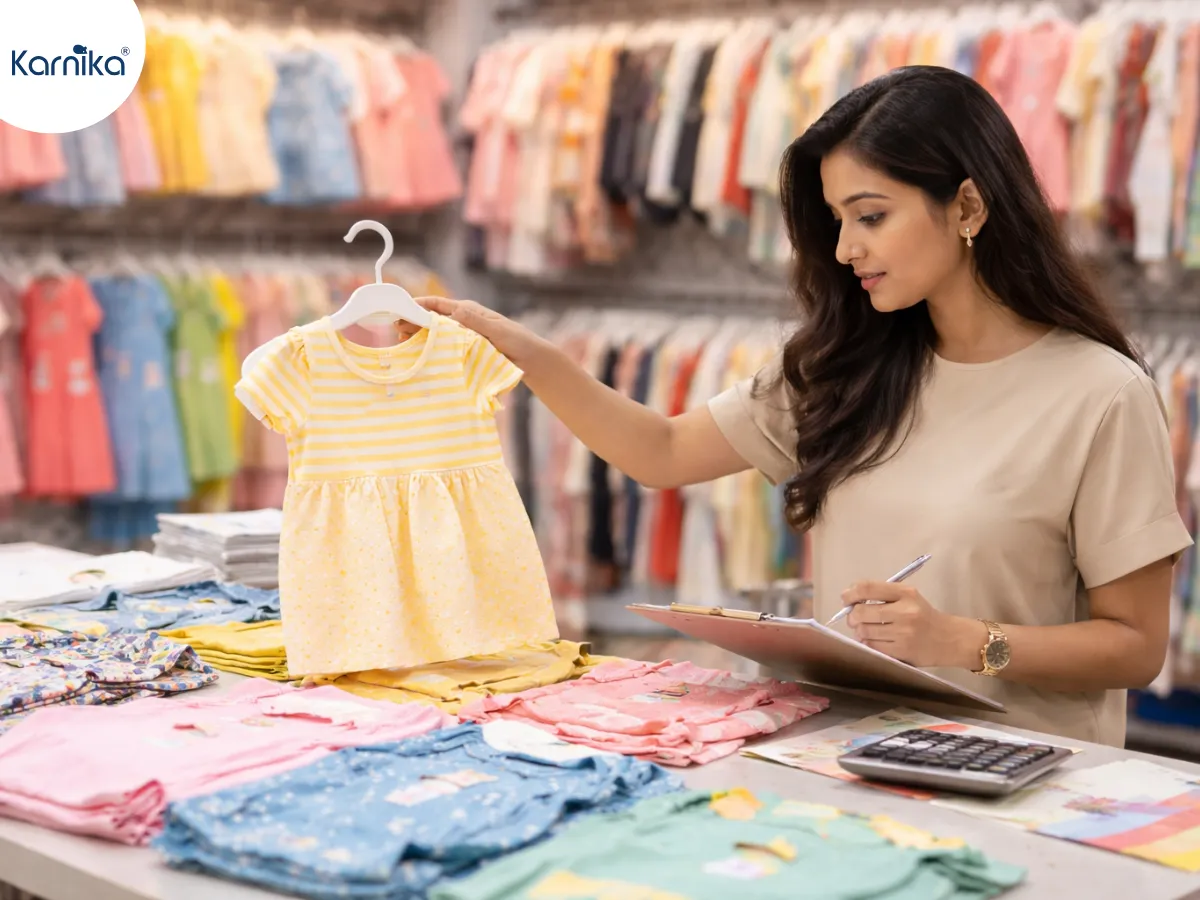
Buying children’s clothing can be overwhelming, especially for first- time buyers. Working like navigating the supplier management to managing inventory and pricing can seem overburdened. However, the right approach and a little guidance can help you solve your problem and have a successful business.
As a trusted and leading manufacturer of high-quality children’s clothing for over 20 years, the experts at Karnika Industries have prepared a step-by-step guide for all, especially first-time bulk kidswear buyers . This guide would help to understand the industry better.
Step 1 – Define Your Target Market and Customer Profile
Do you know your customers? The first step before buying anything is knowing the customers and having a clear knowledge of the target market.
Choosing the Right Age Group and Price Segment
The target audience helps to make an correct decision .So, to start with, before placing any bulk orders, consider the following:
Age Group Focus: First, decide the age ranges that you want to focus on, such as 0-2 years, 3-5 years, 6-10 years, or 11-14 years. This will help chalk down your product selection and size ratios and work according to the children’s clothing size chart.
Budget vs. Premium Segment: It is important to choose the price positioning. Retailers need to decide whether the retailers will follow the budget-friendly or the premium end products. This will help to choose the right supplier.
Online vs. Offline Customers: Right now, the mode of shopping has also become an important criterion. Thus, retailers need to choose whether their primary sales channel will be e-commerce, brick-and-mortar stores, or a combination of both. This impacts marketing and distribution efforts.
Karnika Industries has experience in serving different types of customers, ranging from those who opt for budget-friendly products to those who are premium buyers.
How to Study Local Demand and Seasonal Trends
Analyse the local market to understand the current trends and customer preferences. The following should be kept in mind.
What Sizes Sell Most? Reliable children’s clothing size charts can help to decide what sizes to buy. Again, the sales data can help to understand the sizes that are more in demand.
Seasonal Preferences: Understand the seasonal preferences in your area. For example, parents may be more inclined to purchase back-to-school items in the fall or holiday-themed clothes in the winter.
Competitor Price Range: Research the pricing strategies of your competitors . This helps to stay competitive.
Step 2 – Set a Realistic Starting Budget
Decide Total Investment
As a first-time bulk kidswear buyer, a safe starting budget is around 5-8 lakh rupees. This helps to build a strong foundation for new kidswear buyers who want to enter the children’s clothing market.
Allocate Smartly
Allocating the budget is very crucial. Making smart breakdowns can help.
- 50% for core basics. The basics sell around the year. It is easy to calculate the demand on the basics.
- 30% for seasonal or trendy items. There should be a portion of the budget for trendy and seasonal clothes.
- 20% reserve for reorders. Some budget should be kept for re-orders. This can be decided based on old data.
In this way , the beginners can maintain a balanced inventory.
| Budget Category | Allocation | On ₹6 Lakh | Rationale |
| Core basics | 50% | ₹3,00,000 | Year-round sellers — plain tees, leggings, school wear. Predictable demand, lower markdowns |
| Seasonal / trendy | 30% | ₹1,80,000 | Festival wear, summer dresses, winter basics. Higher margin but time-sensitive |
| Reorder reserve | 20% | ₹1,20,000 | Liquidity buffer to quickly restock fast-moving styles mid-season |
Step 3 – How to Find Reliable Wholesale Kidswear Suppliers
Where to Find Wholesale Kidswear Suppliers
Finding reliable wholesale kidswear suppliers is crucial for your success. Explore the following options:
- Trade shows: Industry-specific trade shows help to meet potential suppliers in person and build a connection.
- Online B2B platforms: Dedicated B2B marketplaces help to connect with a varied wholesale kidswear providers.
- Direct manufacturers: Direct connection with kidswear manufacturers, especially low MOQ clothing manufacturers help to negotiate better pricing and terms.
- Local distributors: Local or regional distributors usually help to offer more personalised service and support.
Wholesale kidswear suppliers who offer flexibility can help to reduce risks. Karnika Industries is known for its commitment to quality products. It is experienced, flexible and reliable.
Read Me: Low MOQ Clothing Manufacturer: Hidden Risks & Insights
Questions to Ask Every Supplier Before Ordering
Before selecting suppliers, the following questions should be asked.
- What is the Minimum Order Quantity (MOQ)? ( Try to look for a low MOQ clothing manufacturer)
- What are the terms for payment and delivery?
- What is the return or defect policy?
Securing favourable terms and reliable delivery is essential for managing your cash flow and minimising risks.
First, it is important to use suitable terms so that cash flow can be managed with minimum risks.
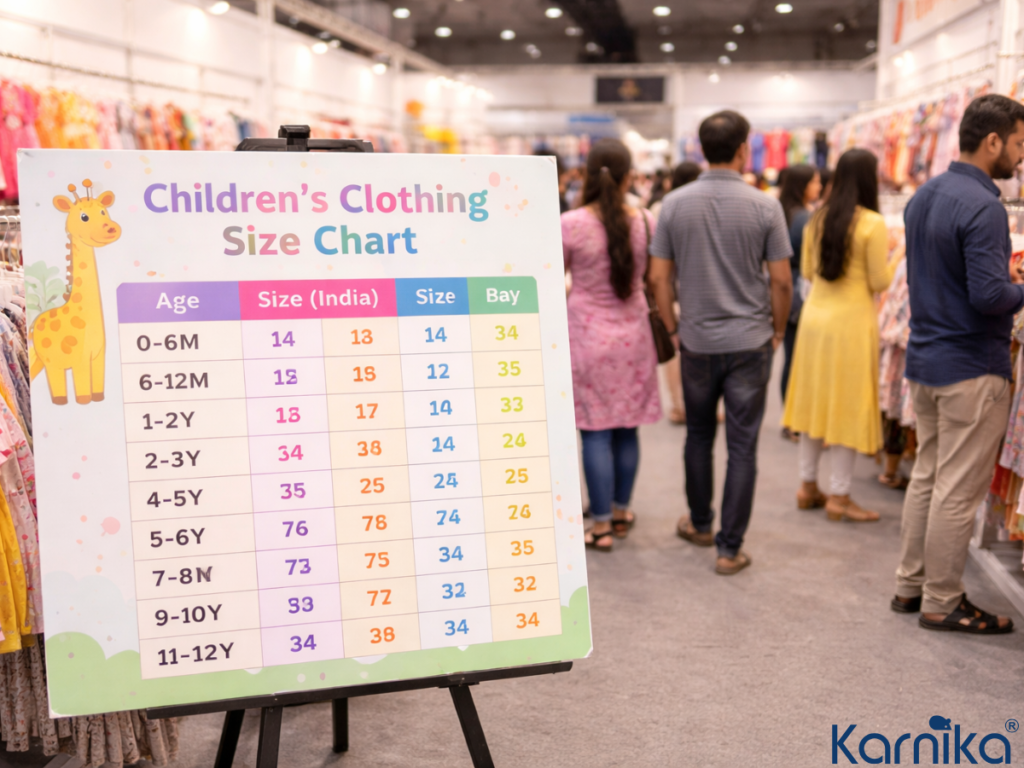
Step 4 – Using a Children’s Clothing Size Chart to Plan Inventory
This is an important step for first-time bulk kidswear buyers. Here is a sample children’s clothing size chart:
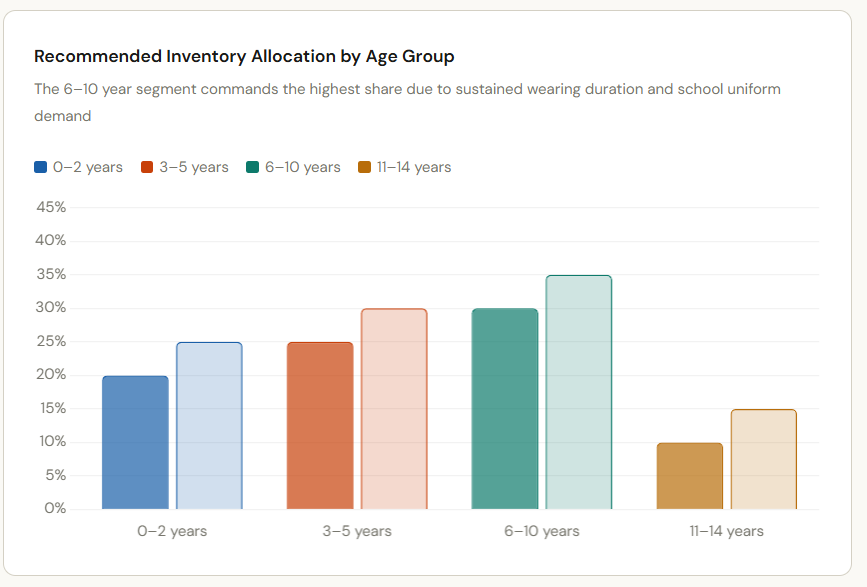
| 0–2 years | 20–25% |
| 3–5 years | 25–30% |
| 6–10 years | 30–35% |
| 11–14 years | 10–15% |
0–2 years (20–25%): The demand is very high, but children of this age grow very fast. So purchasing in limited quantities will avoid leftover stock.
3–5 years (25–30%): This age group has a strong demand for kids’ clothing which is comfortable and stylish. There are better repeat purchases, and thus it is a reliable segment.
6–10 years (30–35%): This group has the highest share because these kids wear the same size for a longer time and their choices of outfits develop. They need more outfits so there are both repeat customers and demand of the same size.
11–14 years (10–15%): This should have a lower allocation as demand is more selective and style-driven.
Step 5 – Why You Should Always Start with a Test Order
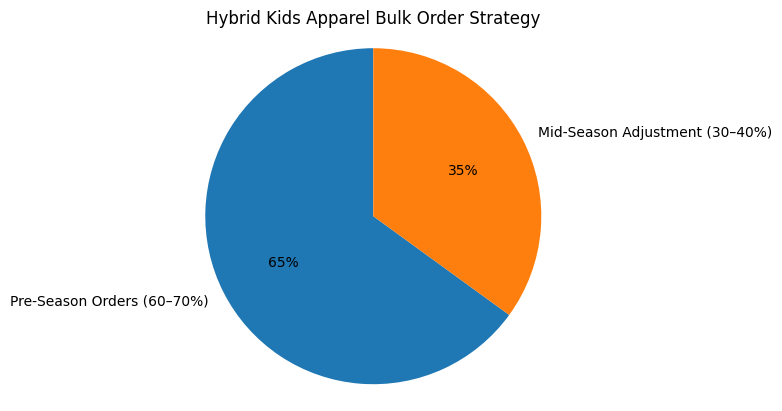
First-time buyers should not commit fully. So, it is better to allocate 60 to 70 % of the budget instead of finishing the entire budget and taking a risk.
Analysing the results of your test order will help you make informed decisions about product selection, size ratios, and pricing for your subsequent orders.
Step 6 – Quality Checklist Before You Sell Any Item
Quality in children’s clothing is prime. Parents will never buy again if the quality is not top-notch. So it is very important to thoroughly inspect the quality. Use the following checklist to ensure your products meet the expected standards:
- Stitching quality: First, examine the seams and stitching for any defects or inconsistencies.
- Fabric softness: The overall feel and texture of the fabrics is crucial for a parent. This should be kept in mind while purchasing.
- Size measurement accuracy: Check if the sizes match the chart.
- Colour fastness: Colours should not bleed or fade.
- Safety standards: The products should follow relevant safety regulations.
These quality checks help to reduce customer dissatisfaction and maintain a positive brand reputation.
Read Me: 9 QC Mistakes That Hurt Wholesale Children’s Clothing Orders
Step 7 – Pricing Formula for Kidswear Retailers
Basic Pricing Formula
The formula can help to determine the retail prices.
Retail Price = Cost × 2 or 2.5 (depending on desired profit margin)
This pricing structure allows you to cover your operational expenses, such as rent, marketing, and staff, while also generating a reasonable profit.
Step 8: Prepare for Reorders & Inventory Tracking
When products start selling, re-orders can come. It is wise to be prepared for that.
Key considerations include:
- Track best-selling sizes: Popular sizes should have sufficient stock levels.
- Identify slow-moving items early: It is best to recognise and clear underperforming products by offering discounts before the season ends.
- Maintain reorder buffer stock: Buffer stock of best-selling items helps to make sure that one can easily fulfil the high demands of the customers.
- Effective inventory management helps to maximise profitability and minimise the risk of stockouts or excess inventory.
Step 9: Avoid Common Beginner Mistakes
As a first-time bulk kidswear buyer, it’s essential to be aware of the common pitfalls to avoid:
- Ordering too many trendy designs: Overcommitting to trendy items can be risky as they may have a shorter shelf life.
- Ignoring size distribution: Failing to allocate your inventory based on the appropriate size ratios can lead to an imbalance in your stock.
- Choosing the cheapest supplier only: While cost is an important factor, prioritise quality, reliability, and favourable terms when selecting your wholesale kidswear suppliers. Only choosing the cheapest can be risky.
- Not checking delivery timelines: Suppliers should be able to deliver within required timeframes to avoid stockouts and delays.
- Mixing personal and business funds: Maintain a clear separation between your personal and business finances .
It is important to recognise and avoid these common mistakes for a strong foundation for bulk kidswear buyers.
Step 10: Scale Smartly After First Season
After a successful first season, scaling is necessary.
- Increase the volume of best-sellers: It is best to book best-sellers more.
- Negotiate better pricing: Sales history can help get better pricing from the customers.
- Diversify categories: Complementary categories and new age groups can help to expand product offerings.
- Improve cash flow planning: Refine your budgeting and inventory management processes to optimise your cash flow and working capital.
Scaling your business smartly will allow you to capitalise on your initial success and drive sustained growth in the competitive kidswear market.
Key Takeaways
First-time bulk kidswear buyers should start with a budget of ₹5–8 lakh, allocate 30–35% of inventory to the 6–10 age group, and place a test order at 60–70% of budget before committing fully. Always verify a supplier’s MOQ, defect policy, and delivery timelines before signing any agreement.
Want to check our collection? Contact Us
Frequently Asked Questions
Q1. How much money do I need to start bulk kidswear buying?
A: For first-time kidswear buyers, 5 to 8 lakh with 50% allocated to core basics, 30% for seasonal/trendy items, and 20% reserved for reorders is a safe budget.
Q2. What is a safe MOQ for first-time buyers?
A: Suppliers with a low MOQ, ideally under 100 units per style helps to reduce risk on initial order.
Q3. How do I choose the right sizes for my first order?
A: A good beginner size ratio is: 0-2 yrs (20-25%), 3-5 yrs (25-30%), 6-10 yrs (30-35%), 11-14 yrs (10-15%). Retailers should focus on the mid age range from 6-10 years as the possibility of getting resale orders and orders in more numbers is high.
Q4. Should I buy it before the season starts?
A: The basics that are in demand throughout the year should at least be ordered before the season starts so that the necessary inventory is in place.
Q5. How can I reduce risk in my first bulk order?
A: Test order is the safest method to start with a bulk order. One should allocate 60-70% of the budget instead of investing 100%. Sales performance should be analysed before scaling up your inventory.
By following the step-by-step guide, first-time bulk kidswear buyers can step into the industry with confidence. The guide will help them to make informed decisions and set their businesses up for long-term success.