
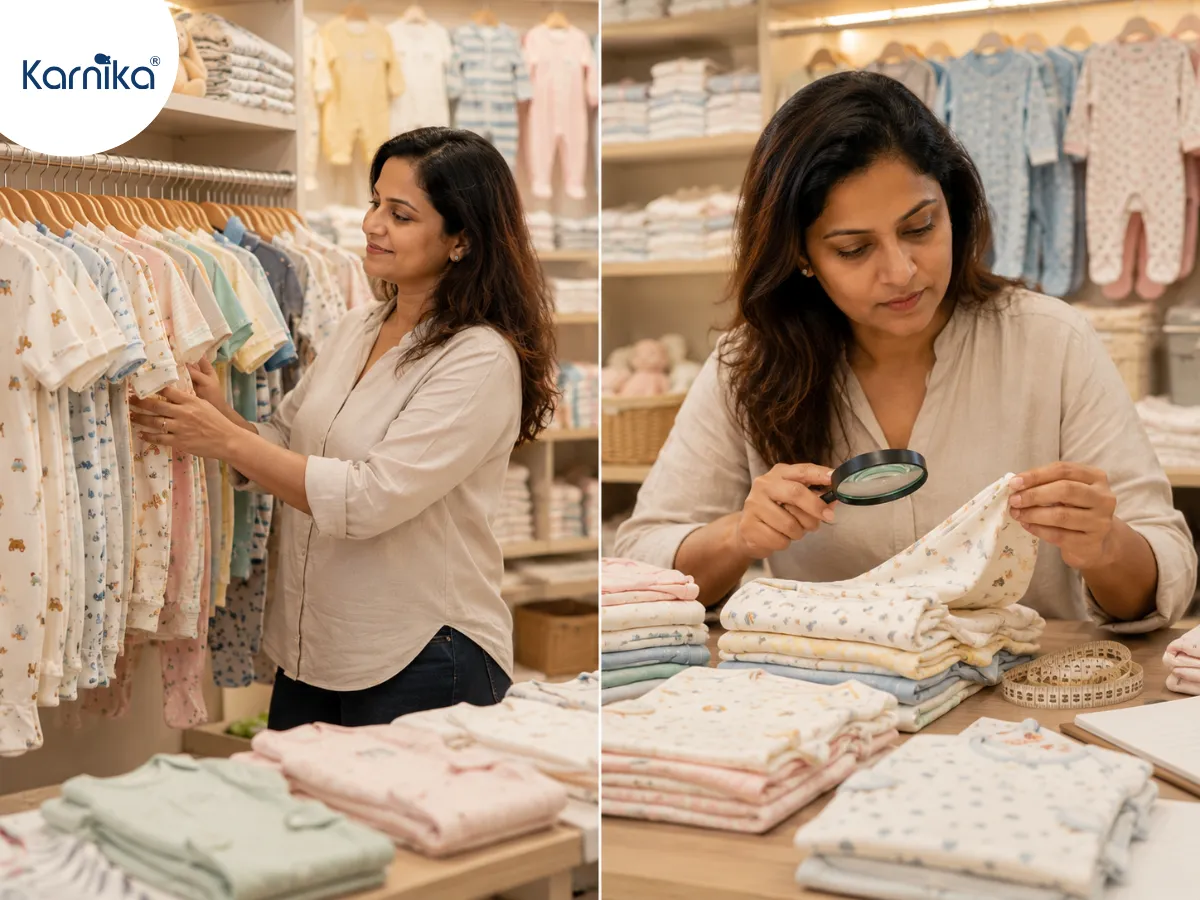
Freemium vs free trial has become very common terminology. This actually relates to trust versus trial that has been there in every industry for years. Trust-based buying depends on the supplier’s reputation, certifications, and track records. On the other hand, trial-based buying means placing a small order and testing the quality and deciding based on that order. The freemium vs free trial concept in the kids wear business means that freemium is a low-commitment, ongoing process where people rely on familiarity instead of a dedicated test. In the same way, trust-based buying depends on reputation, where a retailer orders only because the company is reputed and they do not try or test any of the order before ordering a free trial.
On the other hand, a free trial means a bounded, time-limited process. The person can try but is yet forced to take a decision before spending money. Similarly, in trial-based buying, the retailers or the wholesalers give a small order to the supplier to check the quality of delivery and everything related to production, and then later pay for the bulk order.
Thus, trust-based buying behaves like the freemium concept, and trial-based buying behaves like the free trial concept. We lean on the past record. However, on a free trial, we test and then try.
So, the choice between trust-based buying and trial-based buying affects how inventory can be planned, how cash flow will take place, and if there would be customer satisfaction at all. The guide by the Karnika industries, a Kolkata based kidswear manufacturer in India, provides you the guide to help you understand the difficult concept and decide which suits you better.
What Is Trust-Based Buying?
Trust-based buying is completely dependent on the supplier’s reputation, industry experience, existing relationships, and old data. In this type of buying, quality certifications such as ISI mark, and export credentials also matter. Retailers also see what is the condition of the existing business the suppliers have and how much repeat orders they get.
Benefits of Trust-Based Buying
The benefits of trust-based buyers are:
- There is faster decision-making and it is based on the company reputation.
- There is a chance of stronger long-term relationships as reputations are at stake.
- There is easier negotiation and credibility because of references.
- There is a chance of smoother collaboration, design, and sizing.
- If the season is around then the process can become fast and the time is not wasted.
- There’s access to preferred customer and priority rush.
Risks of Trust-Based Buying Off-trust-based buying:
- The buying is based on assumptions. There is no proper verification.
- The quality checking is done after the large order is placed so if there is any mismatch in the quality or any problem in the production then nothing can be done.
- There’s an overdependence on a single supplier and if the supplier fails then the retailer will face huge losses.
- There can be unexpected delivery and service issues which can come as a shock.
What Is Trial-Based Buying?
Trial based buying takes place when the retailer places a small order, gets the sample, does the sample check, checks the golden sample, writes down proper documents, checks the quality, goes through all tests, and then gives the bulk order.
Here retailers ask the questions:
- Does the product meet the specifications?
- Does the supplier communicate well?
- Does the delivery arrive on time?
Benefits of Trial-Based Buying
- There are low financial risks as the first order is of a small size.
- The retailer can do direct verification of product quality before scaling it.
- There is a realistic evaluation of the supplier.
- The retailer can validate the whole process before ordering a bulk order.
Limitations of Trial-Based Buying
The limitations of trial based buying are:
- There is a longer timeline before the supplier is confirmed as the process is very long.
- The additional cost of running sample and trial orders gets added.
- If the trial batch is too small then there is a chance of disruption in the final product. Often it happens that the main production does not match with the trial batch or the golden sample.
Freemium vs Free Trial: What Wholesale Retailers Can Learn from Software Buying Models
The concept of Freemium vs free trial comes from the software user which can also be applied to wholesale retailers. Freemium members get ongoing access so that the user can judge fit over time whereas a free trial is limited to a specific time where the user has to buy after a trial period. A trust-based buying acts similarly to the freemium model. Trial-based buying behaves like a structured free trial where try and test methods can be used.
Trust-Based Buying vs Trial-Based Buying: Side-by-Side Comparison
| Factor | Trust-Based Buying | Trial-Based Buying |
| Initial risk | Medium | Low |
| Decision speed | High | Moderate |
| Quality verification | Limited | Strong |
| Delivery validation | No | Yes |
| Supplier relationship | Starts early | Builds gradually |
| Best for | Proven suppliers | New suppliers |
| Cash flow risk | Higher | Lower |
| Long-term scalability | High, once validated | High |
This comparison can help the retailers to make their choices. So when a retailer works with a known supplier then trust-based buying is a good option because it helps to give faster results. However if the retailer is working with a completely new supplier then they should go for a trial-based buying.
Why the Best Wholesale Buyers Combine Both Approaches
So, an experienced buyer would never choose one approach exclusively. They use what might be called a trust-then-trial method. They would choose the supplier based on the reputation. Then they give a trial order and then confirm before the bulk order is made.
How to Evaluate a Wholesale Kidswear Supplier Before Scaling Orders
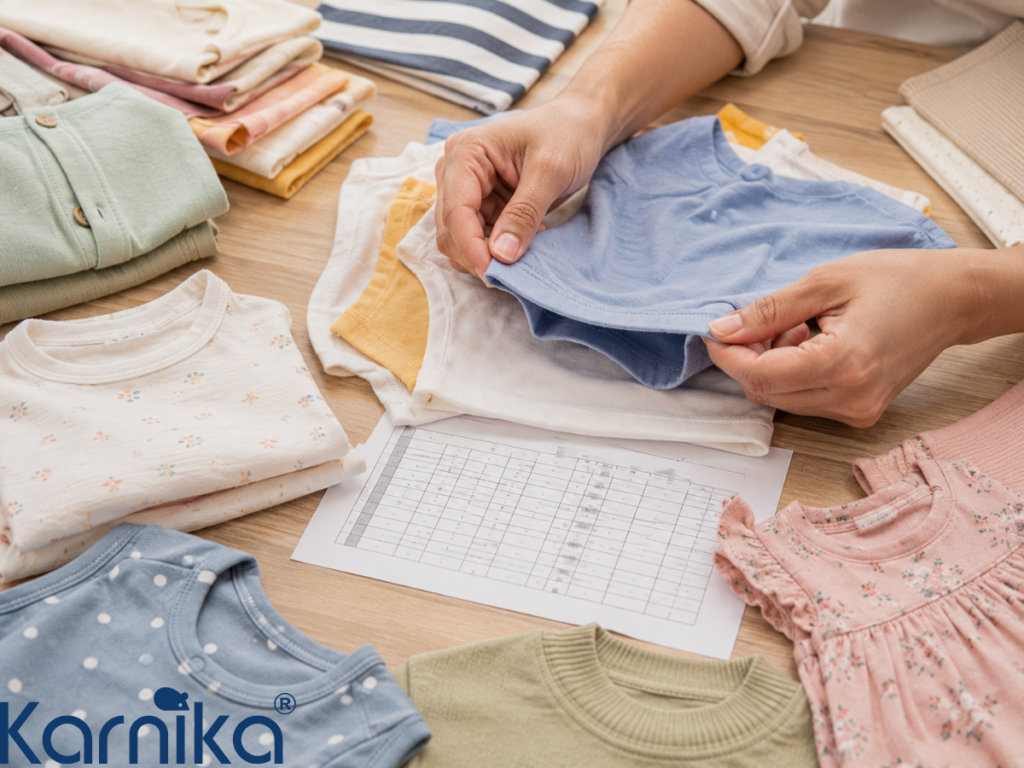
To evaluate a kids clothing wholesale kidswear supplier before scaling orders, a retailer should check:
- The product quality and the consistency is crucial. Quality is very crucial and there should be consistency throughout the entire production.
- The fabric consistency should be there in every batch.
- The stitching should be perfect and the finish should be good.
- The sizes of the products should be accurate as per the size chart.
- There should be flexibility in MOQ for smaller or trial orders.
- There should be transparency in pricing. There should not be any hidden cost.
- The delivery should be reliable and should be agreed as per the decided timeline.
- There should be proper communication and proper response during the production.
- The packaging quality should be good for retail display.
- There should be after-sale support post-delivery.
Common Mistakes Retailers Make
There are some common mistakes that retailers make. They tend to trust the online reviews alone. However, only trusting the online reviews and the social media is not enough nowadays. It is also important to get correct referrals and know from people who have genuinely worked with those suppliers.
A retailer wants to opt for trust-based buying then it is better to do some background check before giving the order. Suppliers tend to order large quantities so that they can secure a lower unit price. However they tend to ignore the early warning signs, supplier communication, and sample evaluation.
From the experience of Karnika we can say that another grave mistake is to go for bulk orders from the first impression as a proof of reliability. A very good catalog and a confident sales conversation or a good social media image is not enough. A retailer should at least check the golden sample before they give the bulk order.
Decision Checklist: Which Buying Approach Fits Your Business?
| Question | Trust-Based | Trial-Based |
| Is the supplier already known to you? | Yes | — |
| Is this your first order with them? | — | Yes |
| Is the order value high? | — | Yes |
| Do you need the products urgently? | Yes | — |
| Are you testing a new product category? | — | Yes |
| Have you already verified product quality? | Yes | — |
Building Long-Term Supplier Relationships After the First Order
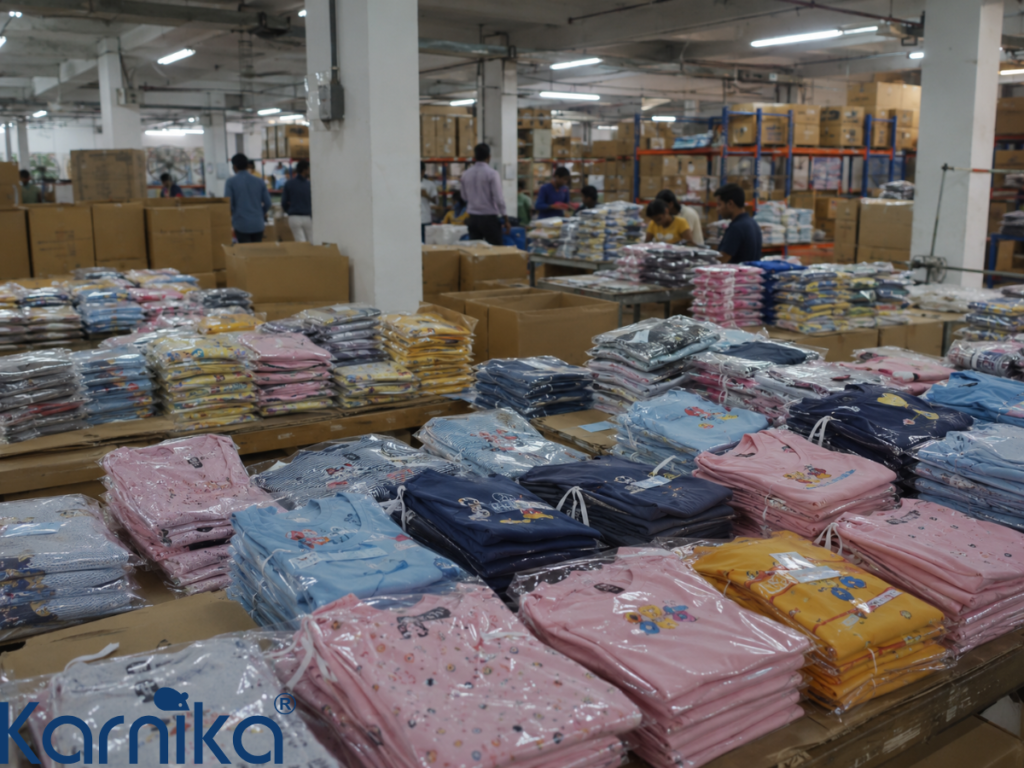
Even after the trial order or the first order, a retailer cannot blindly trust the supplier so the entire supplier-retailer relationship is based on clear communication, proper documentation, and step-by-step clarity. Even if the retailer wants a trust-based supplier or a trial-based supplier, the retailer should have clear communication with both.
Karnika Industries, a Kolkata-based kidswear manufacturer operating from Howrah for more than fifteen years, has set an example of being a trusted supplier which is not based on blind trust but a transparent business relationship. The company has over 2,500 retail clients across India and ensures 92% on-time delivery rate. These figures support trust-based buying for retailers who already know the brand. But its process is also built around sample evaluation and trial orders before scaling. This is what makes it a workable partner for retailers coming in without a prior relationship. This combination reflects the hybrid approach that a retailer should take.
Retailers exploring a new kidswear partner can review Karnika Industries’ sourcing process directly. This includes trial orders and sample evaluation that would ultimately fit into a longer-term wholesale relationship.
Frequently Asked Questions (FAQs)
1. What is trust-based buying in wholesale purchasing?
Trust-based buying is completely dependent on the supplier’s reputation, industry experience, existing relationships, and old data. In this type of buying, quality certifications such as ISI mark, and export credentials also matter. Retailers also see what is the condition of the existing business the suppliers have and how much repeat orders they get.
2. What is trial-based buying, and how does it work for retailers?
Trial based buying takes place when the retailer places a small order, gets the sample, does the sample check, checks the golden sample, writes down proper documents, checks the quality, goes through all tests, and then gives the bulk order.
3. How does the freemium vs free trial model compare to wholesale trust-based and trial-based buying?
In software, freemium vs free trial one has a low-commitment access and other is a time-boxed test, so a trust-based wholesale purchase is similar to premium here. They rely on the reputation instead of a batch test. On the other hand, trial-based buying is similar to a free trial here. The products are tested and then they are bought.
4. Free trial vs demo: is there a wholesale equivalent?
In software the term demo is used for anything that has a guided review whereas a free trial is where the user is allowed to use the trial version of the software and then purchase it. When it comes to the wholesale market, a demo is the supplier’s catalog where only the product can be seen but not felt or touched or scrutinised. On the other hand free trial in wholesale means that the samples are examined, felt, checked properly before the bulk order.
5. How large should a trial order be for a kids T-shirt wholesale?
For kids T-shirt wholesale, there should be at least a handful of finished samples where there will be all the sizes, all the different colors, and all the varieties that would be there. There should be fabric constancy, good stitching quality, and sizing accuracy, which is non-negotiable when it comes to kidswear.