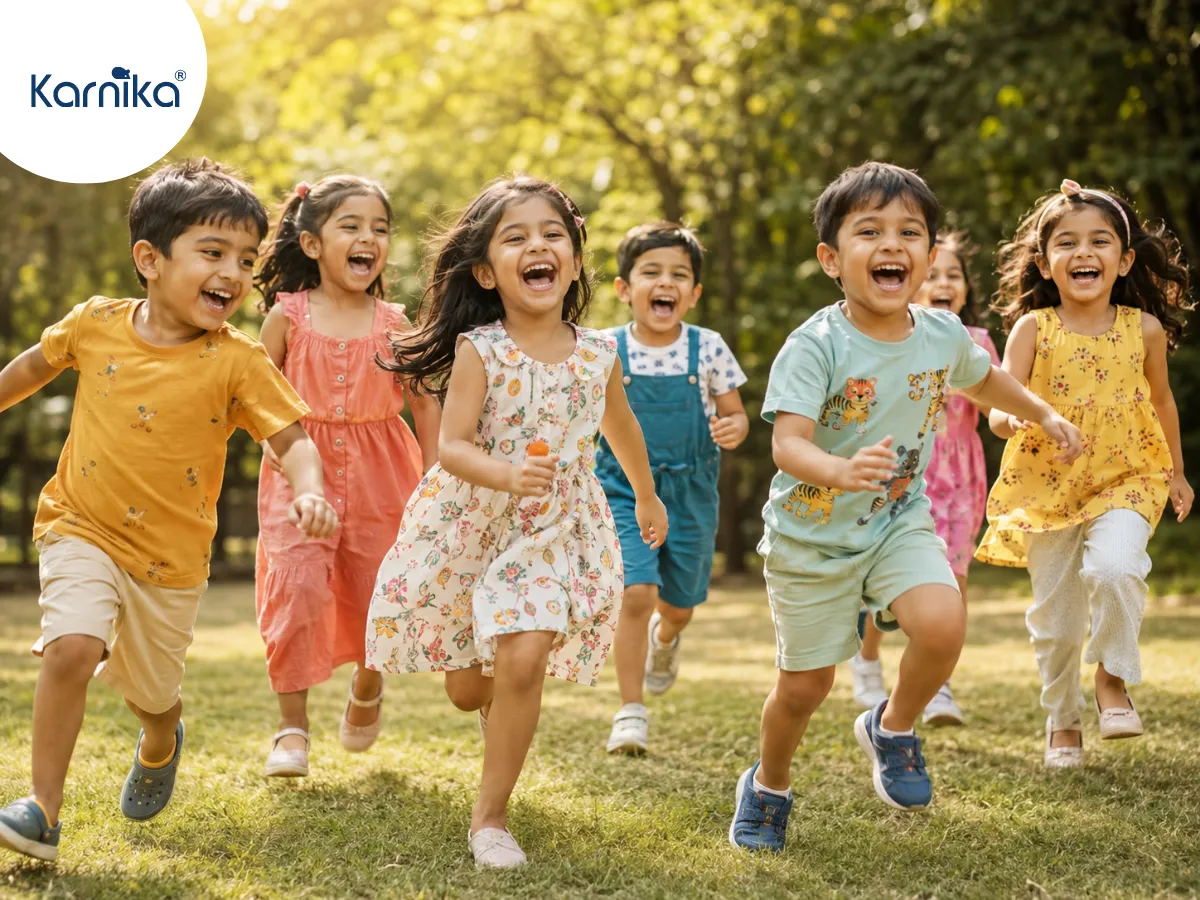
Indian kidswear brands have a huge market currently and this market is expanding briskly. However there is a common question that brands usually have, which platform they should choose to sell their products on.
Some labels prefer wholesale, through which they sell their products. Some labels are shifting from wholesale to building direct relationships with the customers online. Some of them are using both channels, partially through wholesalers, partially through retailers, and partially by using D2C online.
For retailers thus it becomes important to see which Indian kidswear brands they can trust as long-term partners.
Nowadays most Indian kidswear brands do not choose between D2C versus wholesale distribution as they know the benefits of both. D2C or direct selling to customers gives a higher margin to the brands. They are also able to keep the first-hand customer data; however this process demands a lot of marketing spend and this is where most manufacturers do not want to invest. In wholesale distribution, the volume is huge and there is faster cash conversion. There is retail trust as well. However there is a thinner margin here. Thus established kidswear brands try to sell through both the channels.
This blog by Karnika Industries can help to understand exactly what is the competition between D2C and wholesale sellers.
The Indian Kidswear Market in 2026: Size, Growth and Shifting Channels
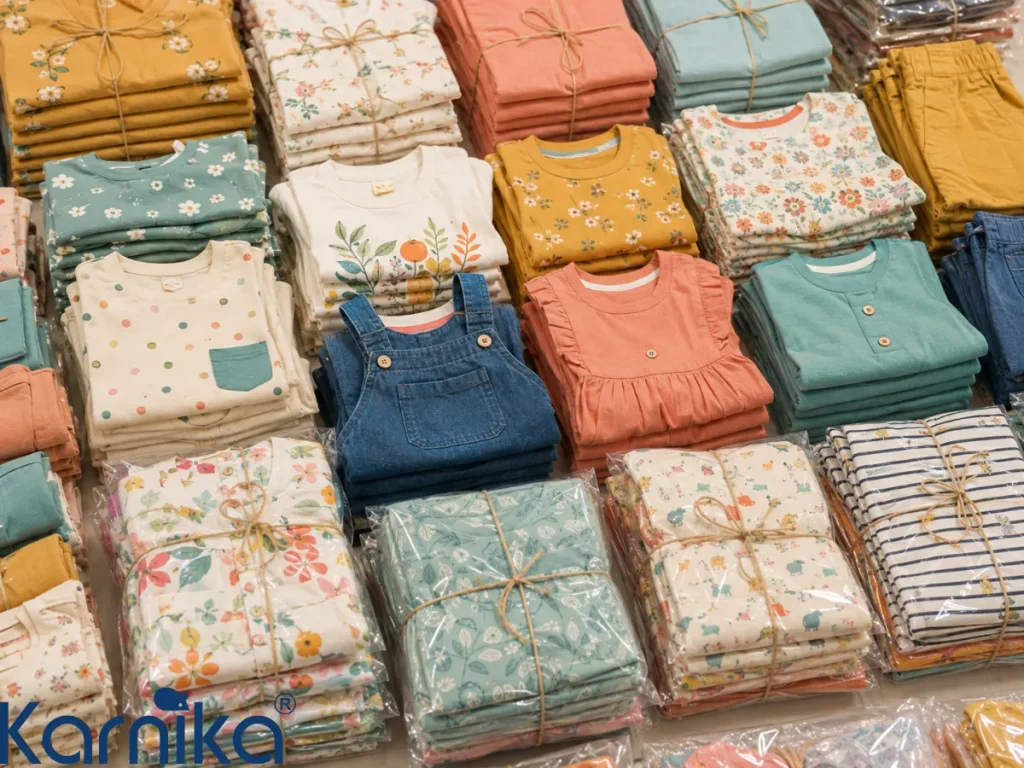
According to IMARC Group’s market research, the Indian kidswear market had a valuation of USD 11.1 billion in 2025. It has a possibility of growth at a compound annual rate of 5% through 2034. However this distribution is not even across the sales channels.
Currently fashion apparel accounts for a third of India’s overall e-commerce spend and according to the industry’s estimates, India’s D2C e-commerce market will be over USD 100 billion in 2026. It is expanding at a rate of 24% a year, where apparel and footwear have the most share in the D2C market.
Tire 2 and Tire 3 cities are huge contributors to this growth. There has been growth of more than 60% in new online shoppers, increasing the demand for D2C channels. This growth in online shopping has also put pressure on the brands who have previously only trusted retail and wholesale distribution.
D2C vs Wholesale Distribution: What’s Actually Changed
Earlier Indian kidswear brands only trusted the wholesale market to sell their products in bulk. The wholesalers had to carry the entire inventory risk so that the manufacturers could focus on production.
However with the trend of online shopping increasing at a tremendous rate currently, the D2C model has seen new light. Now brands can directly sell to the parents through their own websites or an online shopping website, where they can control the prices and have a track on the entire process themselves. Through this process the margin is greater than through wholesale selling.
As the infrastructure has matured it has become affordable to run a D2C system with payment gateways and ads to social media, so even mid-sized manufacturers are able to test this system without even having a complete e-commerce team. So, there has been a change in D2C vs wholesale distribution.
D2C vs Wholesale Margins: Where the Money Actually Goes
| Factor | D2C | Wholesale |
| Typical gross margin | Higher per unit; no distributor markup | Lower per unit; distributor takes a cut |
| Upfront investment | Website, marketing, fulfilment, returns handling | Sales team and production capacity, largely |
| Cash flow | Slower; brand carries inventory and marketing spend | Faster; retailer pays in bulk, often closer to delivery |
| Customer data | Direct access to buyer behaviour and preferences | Limited; retailer owns the customer relationship |
| Reach, especially tier-2/3 | Depends on marketing spend and logistics reach | Fast, via existing retailer networks |
| Inventory risk | Sits with the brand | Shifts largely to the retailer |
Comparing D2C vs wholesale margin, it seems that D2C margins are higher; however manufacturers sometimes miss the real pointers:
- the custom accusation cost
- the return logistics
- the genuine problems in kidswear sizing might mismatch
- there might be higher return rates than the average ones
- the working capital that will be required for the direct-to-customer inventory
Even though wholesale margins are thinner, these problems are solved by the wholesalers and retailers. The suppliers only have to focus on manufacturing so they can sell in bulk and get paid fast.
Where Wholesale Still Wins for Kidswear Brands in India
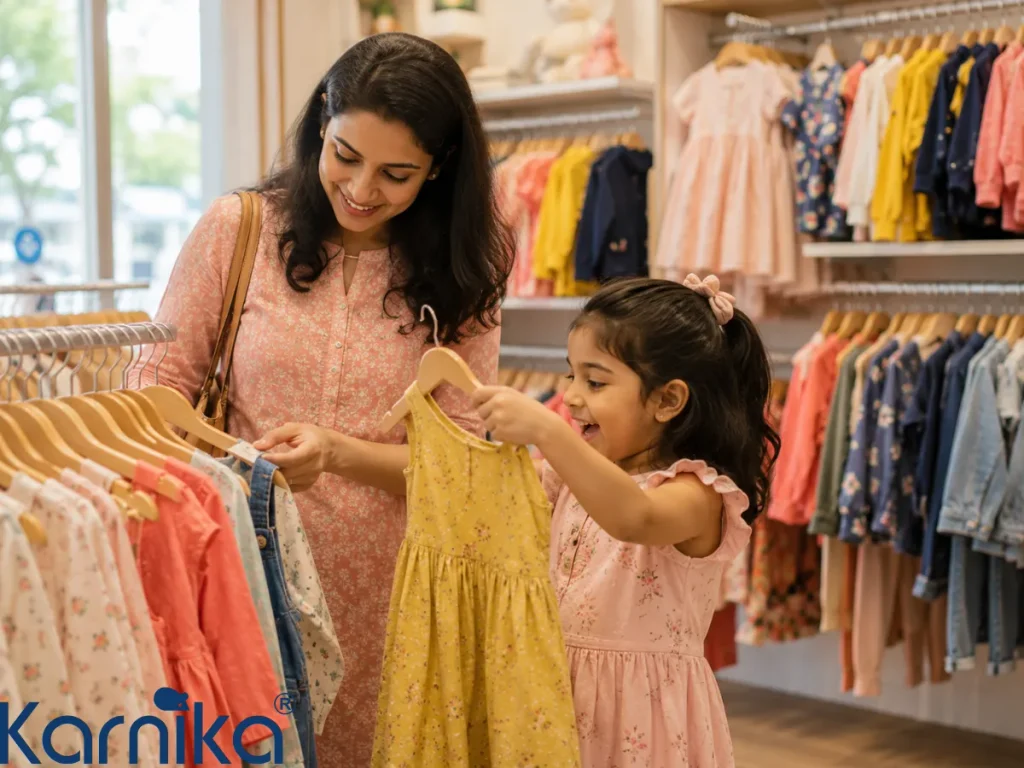
In the kidswear market, there is still a huge demand for stores where parents love to visit and feel the fabric before buying kids’ wear. This is such a section where parents are very particular about their kids’ clothes, especially baby clothes.
Instead of purchasing baby clothes online or instead of believing in a brand, first parents always prefer to go to the store physically, feel the brand, and test the brand. After they start believing in the brand they might purchase it online. However the first preference is always a store visit. In such a situation the wholesale market gets the upper hand.
The retailers take all the inventories and they pay the manufacturers during the time of delivery or even in advance so the manufacturers get the money on time and the cash flow does not stop, even in peak seasons, so the transaction is very smooth.
Kidswear Brands India Offers Are Increasingly Testing D2C First
With the change of time, however, kidswear brands of India are now preferring to at least try the D2C channel once. They are able to test genuine customers, try new trends, check the taste of the customers, and get direct feedback. The manufacturers can directly connect with the parents through the power of storytelling through social media and websites. The increase in social media, social media buying, and online buying, especially in cities and towns, has definitely made the brands test online channels once.
The 3-Channel Fit Test: A Quick Framework for Choosing Your Mix
Before committing production capacity to one channel, it is worth running a line or a season through three questions:
- Product fit: is this an everyday basic that suits bulk, price-sensitive wholesale orders, or a limited, story-led capsule that suits direct selling?
- Cash flow: can the business fund its own inventory and marketing spend, or does it need retailers to absorb that risk instead?
- Reach: does the brand already have retail relationships in the cities it wants to grow in, or does it need D2C to reach them directly?
Answering these honestly is a simple way to avoid overbuilding a direct-to-consumer operation a brand cannot yet support, or underpricing a wholesale order because the brand assumes D2C-level margins it will not actually see.
The Hybrid Model: How Indian Kidswear Brands Are Rethinking Distribution in 2026
In 2026 Indian kidswear brands are trying to rethink how distribution should be done. They are opting for the hybrid model. Partially they are depending on wholesale, where they can sell in high volume, get the payments on time, and do not have to think about the inventory.
On the other hand they are also choosing the D2C channel, especially online, where they are keeping limited prints, trying to experiment with a few things, and are able to connect their stories with the new age parents. They are able to narrate their stories to the parents and connect directly to them.
However running two channels needs two different operating rhythms. Thus a hybrid model will only work if the brand actually focuses on both mediums instead of keeping one as a side option.
Retailers should not think that a brand’s D2C presence will threaten the wholesale relationship because both can go side by side. A supplier can maintain a long-term supplier-retailer relationship and simultaneously sell directly to customers through online platforms.
Karnika Industries, a kidswear manufacturer based in Howrah,near Kolkata, with 15+ years of experience, has worked with more than 2,500 retailers across India. In January 2026 the company announced a tie-up with Kidcity, which is an e-commerce retail kiosks business that has been selling kidswear since 2020. Kidcity is now establishing a direct-to-consumer point of sale with Karnika even though Karnika maintains its B2B relationships across India and the UAE. One platform has not replaced the other one.
The retailers should not focus on this question of whether the brand chooses the D2C channel. The retailers should question whether the brand prioritizes the wholesale relationships, gives importance to the supplier-retailer relationship, and delivers a quality product on time. For any manufacturer, hybridization is possible and the retailers can still get the best products on time.
Frequently Asked Questions (FAQs)
1. What is the difference between D2C and wholesale distribution for kidswear brands?
D2C means directly selling to customers through one’s own website, app, or online platform. On the other hand wholesale distribution means selling in bulk to the wholesalers and retailers, who then sell the product to the customers. Here the inventory risk is taken completely by the retailers or the wholesalers.
2. Are Indian kidswear brands moving away from wholesale completely?
No. The Indian kidswear brands that are established are not completely shifting from wholesale because they know that in the wholesale market they can sell in bulk and do not have to take care of a lot of problems. However they are definitely trying to also build a direct customer relationship through websites or platforms where they can manage both the wholesale and D2C channels.
3. Which channel has better margins, D2C or wholesale?
The D2C channel usually has a higher margin per unit sold. However there’s a custom acquisition cost, handling cost, and platform fee that can narrow the gap. The wholesale margins are usually low; however the cash flow is faster and the risks are lower.
4. How is the Indian kidswear market expected to grow by 2034?
According to IMARC Group’s market research, the Indian kidswear market had a valuation of USD 11.1 billion in 2025. It has a possibility of growth at a compound annual rate of 5% through 2034. However this distribution is not even across the sales channels. However as per industrial record, India’s D2C e-commerce market will be over USD 100 billion in 2026. It is expanding at a rate of 24% a year, where apparel and footwear have the most share in the D2C market.
5. Should retailers worry about kidswear brands India offers going fully D2C?
No, retailers should not worry about kidwear brands in India going fully D2C because most manufacturers who are experienced would not completely go D2C. They will maintain a hybrid balance as retail networks usually help to reach customers faster and get flat cash flow faster.