
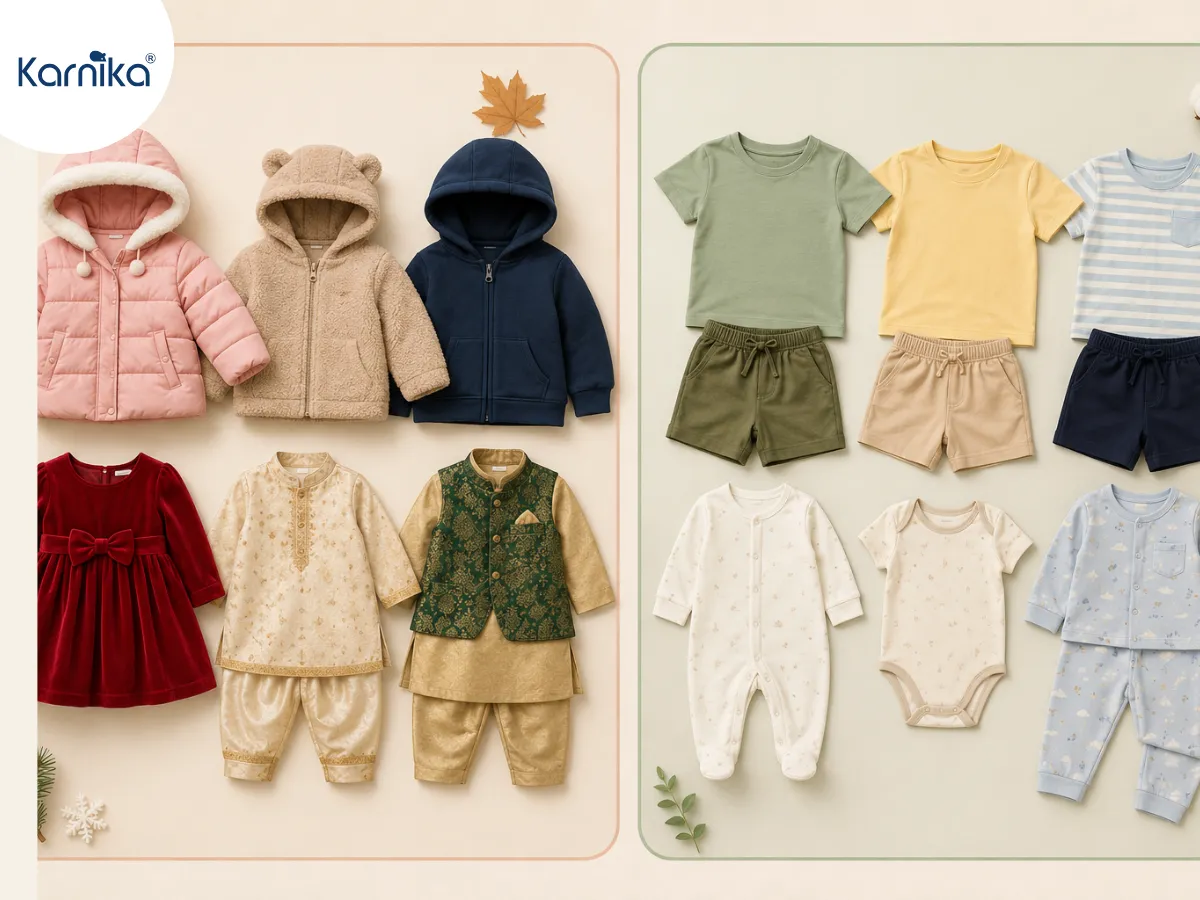
Seasonal stock planning is one of the most important criteria that a retailer should pay heed to especially if they run kidswear stores. For a kidswear store, inventory planning is a crucial decision that can make or break the profits. If the retailers do not plan as per the statistics, there is a high possibility that winter jackets can stay in stocks for months. On the other hand if they order too less, they might lose customers to the competitive market.
Thus it is necessary to plan the inventory correctly. This guide will help you to plan your inventory season by season, and help to avoid the mistakes that lead to losses.
Understanding the Difference Between Seasonal and All-Year Products
All products are not for the entire season and some products are meant for all the year round. Thus, the retailers first have to decide which products are seasonal and which are all the year round.
What Are Seasonal Products?
Seasonal products are items that sell well during a specific time of year. These products are not in demand during other seasons unless people are buying for travel purpose. In kidswear, these include:
- Winter jackets, hoodies, and thermal sets.
- Festive and ethnic wear for occasions like Durga Puja, Diwali, Eid, and Christmas.
- Rainwear and quick-dry clothing for the monsoon season.
- Light summer collections like sleeveless tops and breathable cotton dresses.
What Are All-Year Products?
All-year or evergreen products are items that customers buy regardless of the season. These are those products that parents will purchase irrespective of any season. Examples include:
- Basic cotton t-shirts
- Leggings and everyday shorts
- School-ready clothing
- Infant essentials like onesies and bodysuits
- Cotton nightwear sets

Why Both Categories Matter
Seasonal products are required occasionally. But when the season arrives, they are in huge demand especially for growing kids. Evergreen products are in demand all year round. Seasonal demand spikes profit in a specific time but if a store only stocks seasonal products, then they will have slow cash flow during off-seasons. On the other hand, if a retailer only stocks basics, they will never get the hike in profits that one can get from seasonal products.
The most profitable kidswear stores carry both, in the right proportion.
Quick Comparison: Seasonal vs All-Year Kidswear Products
| Factor | Seasonal Products | All-Year Products |
| Demand Pattern | Peaks during specific months | Consistent throughout the year |
| Profit Margin | Higher during peak season | Moderate but stable |
| Stock Risk | High if overstocked | Low, moves steadily |
| Examples | Jackets, festive wear, rainwear | T-shirts, leggings, nightwear |
| Cash Flow Impact | Irregular | Steady |
| Storage Risk | High post-season | Low |
Read Me: Fast Fashion vs Sustainable Fashion: What Pays Off?
Why Your Stock Mix Directly Affects Your Profitability
Decision of how much products to buy is very crucial. Seasonal inventory management is crucial to maintain the correct balance between seasonal products and evergreen products.
The Cost of Overstocking Seasonal Inventory
Overstocking is a huge and common mistake that can result in losses. Too much seasonal stock forces the retailer to give discounted prices. Unsold inventory also results in taking up storage. The money that is locked in dead stocks cannot be used anywhere else.
If a store in Kolkata that overstocks winter jackets by even 30 percent. It will have the dead stock lying in the store at least for next three months . This will force the retailer to sell the stocks at a very low price.
The Risk of Understocking High-Demand Products
Understocking evergreen products can result in losing customers. If a parent wants a basic tee and shorts and does not get it, they will search in another store. Thus, the decision of stocking products should be based on calculations.
The Benefits of a Balanced Inventory Strategy
If retailers keep balanced stocks, they can ensure constant cash flow throughout the year and also get profits from seasonal spikes.
Recommended Stock Mix for a Kidswear Retail Store
Few tips can help retailers to purchase the correct stock mix.
The 70-30 Rule: A Practical Starting Point
Best kidswear brands in India also understand that the 70: 30 rule is the best practice for stocking up products. Retailers should spend 70 percent of their budget on evergreen clothes that are always in demand and 30 percent on seasonal products that are in demand only in specific seasons.
Recommended Stock Allocation by Store Type
| Store Type | Evergreen % | Seasonal % | Reason |
| New store (first year) | 80% | 20% | Focus on cash flow stability |
| Established store (urban) | 65% | 35% | Higher seasonal demand in cities |
| Kolkata retailer (all seasons) | 70% | 30% | Balanced climate and festival demand |
| Small store (limited space) | 80% | 20% | Less storage risk |
| Store near school zone | 75% | 25% | School wear dominates demand |
When to Increase Your Seasonal Inventory
There are few seasons where seasonal products are in high demand.
- In India, festivals are very important and kidswear brands in India target festivals like Durga Puja, Diwali, Eid, Christmas and so on where people buy occasional dresses.
- School reopening periods are times when parents look for school uniforms, underwear and socks for their kids.
- Just before winter season the demand for hoodies, jackets and sweaters increases. As children grow out of sizes quickly, the demand for seasonal wear arrives every season.
When to Focus More on Evergreen Products
Evergreen products should be in stock all the time. Newborn clothes and basic kidswear should be in stock as they sell quickly.
Seasonal Inventory Planning for Kolkata Retailers
Kolkata generally has a hot and humid climate. It experiences rainfall for a few months and it also experiences winter for two months. Above that Kolkata is one city that celebrates its festivals grandly, especially Durga Puja. People in Kolkata also stock up during weddings. Thus, retailers should approach the seasons in a proper way.
Summer Collection Planning (March to June)
In Kolkata summers are very long and hot. Lightweight, soft fabrics are a must-haves during this period. Parents often prefer half shirts and shorts,and cotton frocks, sleeveless tank tops and all comfortable kidswear that can absorb sweat and give relief in the summer season. Order for summer collections by February so that they reach stores on time.
Monsoon Season Essentials (July to September)
The problem with monsoons in Kolkata is that the weather is still hot and humid at times and cold at other times when it rains profusely. However, in such a weather parents prefer clothes that dry up quickly. Thus poly cotton blends are often preferred as they dry fast.
Monsoon is also a good time to clear summer stock at moderate discounts while transitioning to autumn-friendly styles.
Winter Collection Requirements (November to February)
Winters in Kolkata might not be as harsh as North India, but still the demand for hoodies starts from November. Even though there is a very short chill winter, parents still buy cute sweaters, trendy jackets and other accessories for their kids. Thus kids garments manufacturing companies in Kolkata know that the demand for winter kidswear will arise in October so that the parents are ready for the winter in November.
Festive Season Inventory Opportunities (September to December)
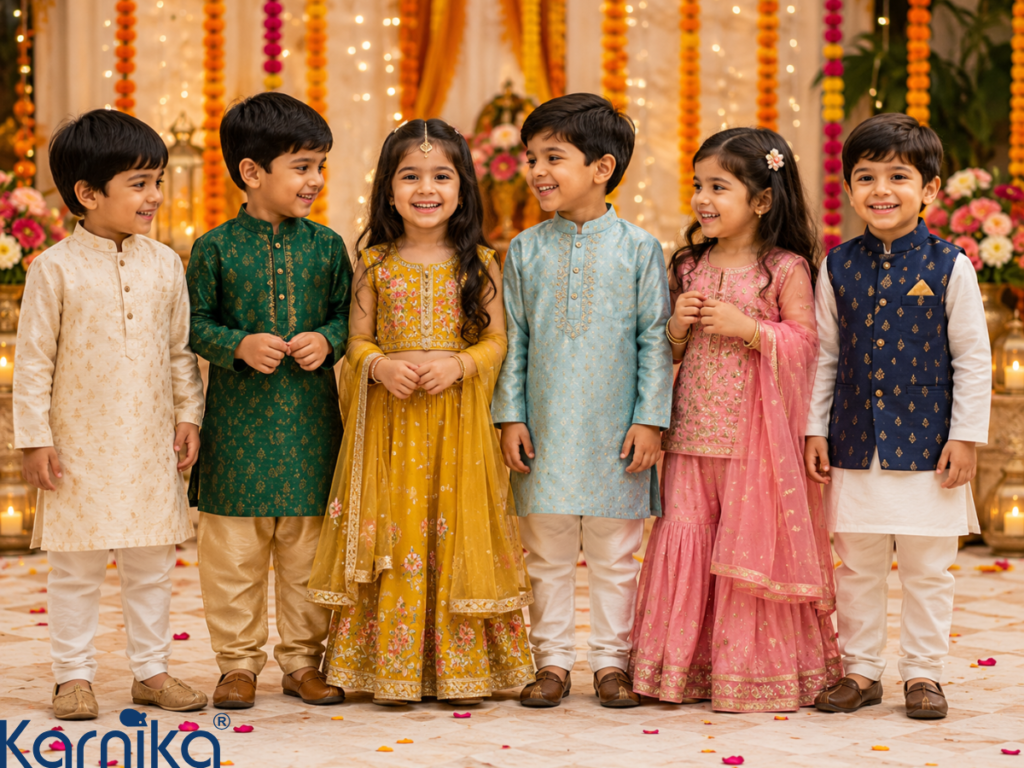
The festival season is the biggest revenue opportunity for kidswear retailers in Kolkata. For people of Kolkata , Durga Puja is a celebration for which people buy from months ahead. This festival alone can bring huge revenue to a retailer if planned properly. Retailers should make a list and stock up the dresses that parents would definitely invest on.
- Ethnic wear including kurta sets, lehengas, and sherwanis for kids. Every parent loves seeing their young ones in gorgeous ethnic wear during festivities. The best kidswear brands in India know that this is the time to show their designs and quality products.
- Party wear dresses and suits for girls and boys are always in demand in festive season. Above that usually in Kolkata November to February is wedding season. So, parents buy party wear that the kids can wear both during festivals and weddings.
- Special occasion outfits with embellishments and embroidery are those dresses that parents buy at least once and allows the child to wear it until they grow out of size.
Begin sourcing your festive collection at least two months before the season. If you work with a garments manufacturing company in Kolkata, discuss festive production timelines in July and August to ensure availability.
Seasonal Buying Calendar for Kolkata Kidswear Retailers
| Season | Peak Sales Period | Start Ordering | Key Products |
| Summer | March to June | January to February | Cotton tees, shorts, dresses |
| Monsoon | July to September | May to June | Quick-dry wear, casual basics |
| Festive | September to November | July to August | Ethnic, party, occasion wear |
| Winter | November to February | August to September | Hoodies, jackets, thermals |
| School Reopening | January and June | Two months before | Uniform sets, school basics |
Read Me: Cotton blend fabric vs cotton: Wholesale buyers’ practical guide
Best All-Year Kidswear Products That Deliver Consistent Sales
While seasonal stock gets a lot of attention, your evergreen products are the real foundation of your business. These are the items that sell every single month without fail.
| Product Category | Why It Sells Consistently |
| Basic T-Shirts | Everyday wear for school, play, and layering; high demand year-round. |
| Cotton Leggings | Versatile, affordable, and frequently repurchased by parents. |
| Everyday Shorts | Popular as daily indoor and outdoor wear, especially in warm climates. |
| Infant Essentials | Constant demand due to newborns and rapid size changes. |
| Nightwear Sets | Needed throughout the year and regularly replaced as children grow. |
| School & Casual Wear Basics | Steady demand from school-going children, with seasonal enrollment spikes. |
How to Use Sales Data to Improve Your Stock Mix
Smart inventory planning is not just about following general rules. It is about using your own store’s data to make better decisions.
- Identify Your Best-Selling Categories : Review your sales records every quarter and identify which product categories contributed the most to your revenue. This tells you where to invest more and where to cut back.
- Track Seasonal Trends in Your Store: Do not just rely on general advice about seasons. Track when your own store sees spikes in specific categories. Your customer base, location, and local climate will influence your specific seasonal patterns.
- Analyze Repeat Purchase Products: Products with high repeat purchase rates, means customers come back to buy the same item again. These are your most valuable inventory. Prioritize these for consistent reordering.
Simple Inventory Review Checklist for Kidswear Retailers
| Review Area | What to Check | Frequency |
| Best sellers | Top 10 selling products by units and revenue | Monthly |
| Slow movers | Products with less than 30% of expected sales | End of season |
| Stockouts | Products that ran out before season ended | Monthly |
| Overstock | Products with more than 40% unsold at season end | End of season |
| Repeat purchases | Products bought by same customer more than once | Quarterly |
| Category performance | Revenue share by category vs last year | Quarterly |
Common Inventory Mistakes Kidswear Retailers Should Avoid
There are some mistakes that are very common. It is better to analyse and avoid that.
- Ignoring Local Climate and Festival Patterns: Kolkata’s climate is different from Delhi or Mumbai. Festival dates and shopping patterns also vary by region. Do not blindly follow national trend reports. Adjust your planning for your specific market.
- Following Trends Without Data: Just because a particular style is trending on social media does not mean your customers want it. Always validate trend purchases against your own sales history.
- Not Reordering Best Sellers Fast Enough: Running out of your top-selling evergreen products is an expensive mistake. Set reorder triggers for your best sellers so that you never go out of stock on items with reliable demand.
How Reliable Manufacturers Help Retailers Maintain the Right Stock Mix
The quality of your supplier relationships has a direct impact on your ability to maintain the right stock mix. This is especially true for retailers who source from a garments manufacturing company in Kolkata.
- Faster Replenishment of Fast-Moving Products: A manufacturer with good production capacity can replenish your best sellers quickly. This means you do not have to over-order upfront because you know you can get more stock when you need it.
- Access to Both Seasonal and Evergreen Collections: Working with a manufacturer that produces year-round means you can source both your seasonal and evergreen inventory from a trusted partner. This simplifies logistics and often improves pricing.
- Consistent Product Availability: Reliable manufacturers maintain production consistency across seasons. This means you can plan your ordering calendar with confidence, knowing that the products you need will be available when you need them.
- Better Inventory Planning Support: Experienced manufacturers who work closely with retailers often provide insights into industry trends, production timelines, and popular styles. This kind of partnership goes beyond a simple buyer-seller relationship.
Karnika’s experience has shown that the retailers who build strong manufacturer partnerships consistently outperform those who buy from multiple disconnected suppliers. Consistency in product quality, availability, and pricing makes inventory planning significantly easier and more profitable.
Future Trends in Kidswear Inventory Planning
There are few trends that help to gain profit.
Smaller, More Frequent Orders
Retailers are moving away from large seasonal bulk orders toward smaller, more frequent replenishments. This reduces overstock risk and keeps inventory fresher.
Data-Driven Buying Decisions
Even small retailers are beginning to use basic sales tracking tools to make smarter buying decisions. Understanding which products move and when is becoming a competitive advantage.
Conclusion
Building the right seasonal stock mix for your kidswear store is not complicated, but it does require discipline and data. The core principle is straightforward: seasonal products drive your revenue spikes, evergreen products provide your steady cash flow, and the most successful retailers balance both rather than relying heavily on one.
Start with a 70-30 split in favor of evergreen products. Use your sales data to refine this over time. Plan your seasonal orders ahead of the calendar, not in response to it. And invest in supplier relationships, particularly with garments manufacturing companies in Kolkata, that give you the flexibility to replenish fast movers quickly and access a full range of seasonal and year-round styles.
The retailers who plan inventory well are not the ones with the biggest budgets. They are the ones who buy smart, track their sales honestly, and adjust quickly when the data tells them to.
Karnika Industries provides the correct mix of products that retailers must stock. To know more, contact us.
Frequently Asked Questions (FAQs)
1. What is the ideal stock mix for a kidswear store?
For most kidswear stores, a 70 percent evergreen and 30 percent seasonal split works well. New stores or stores with limited storage should start closer to 80-20 in favor of evergreen products.
2. How much seasonal inventory should retailers keep?
Seasonal inventory should typically be 25 to 35 percent of your total stock. Increase this during festival or school reopening periods and reduce it if you are in a market with unpredictable demand.
3. Which kidswear products sell throughout the year?
Basic cotton t-shirts, leggings, everyday shorts, infant essentials, nightwear sets, and school wear basics are the most reliable all-year sellers in kidswear retail.
4. How can retailers avoid excess seasonal stock?
Start with smaller seasonal orders, plan mid-season reorders based on actual demand, and review your end-of-season data to inform next year’s buying quantity.
5. What are the best evergreen products in children’s clothing?
The most consistent evergreen products are basic t-shirts, leggings, shorts, onesies and infant wear, cotton nightwear, and school-ready clothing like plain shirts and trousers.